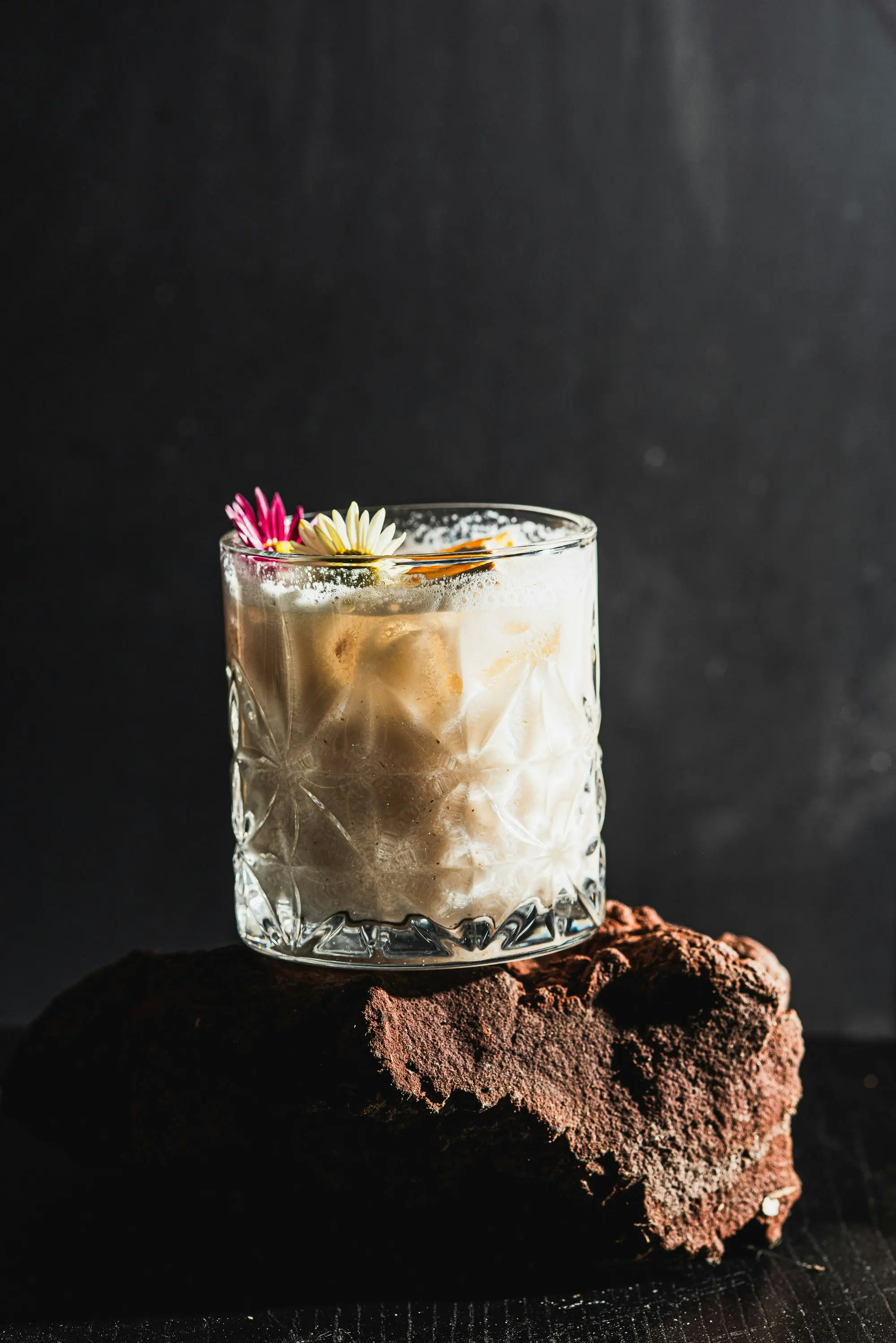
Is yakju a natural wine?
Why Korean rice wine isn't "natural wine" — and why lo-fi wine enthusiasts will love it anyway.

Can Korean clear rice wine— yakju (약주, 藥酒)—be considered natural wine?
Well, no. You see: despite the translation "rice wine," yakju isn't really wine at all, natural or otherwise.
It's the filtered sibling of cloudy takju (탁주) such as makgeolli, a brew made by fermenting a starchy base [rice] with a fermentation starter called nuruk (누룩), is Korea's traditional wild fermentation starter which contains a diverse microbiology of wild yeasts, molds, and lactic acid bacteria.
This process gives yakju the precision and clean finish you'd look for in a good white, with the grainy, lactic undertow of a living ferment.
That's why if you drink natural wine, Korea's traditional rice wine may be the most interesting thing you haven't tried yet.
What does “natural wine” mean?
Officially, nothing. There's no legal definition, no governing body and no single certification, so the term means whatever the people using it agree on. In practice, they agree on quite a lot:
In the vineyard: organic or biodynamic farming, with no synthetic pesticides, herbicides or fertilizers. Certification is optional; plenty of growers skip it.
At harvest: grapes picked by hand.
In the cellar: fermentation by the native yeasts already on the grapes, not a commercial strain.
What goes in: grapes, and at most a little sulfur. No added sugar, acid, tannin or enzymes.
What's left out: fining, filtration, flash pasteurization, and heavy-handed tools like reverse osmosis.
The stricter lists put numbers on it. Raisin caps added sulfur at 30 mg/L for reds and 40 for whites. And organic alone doesn't get you there: an organic wine can still use cultured yeast and a long list of cellar additives.
Two things "natural wine" doesn't mean. It isn't automatically cloudy or funky (that reputation comes largely from the scene's more provocative bottles), and it isn't a style. It's a way of working, which is why the scene follows producers rather than grapes or regions.

Younger winemakers, young vineyards, and independent labels are at the heart of the natural wine movement.

Saint Vincent Winnica in Borów Wielki, Nowe Miasteczko (Poland) uses biodynamic methods and minimal intervention to produce their award-winning wines. Image: @amfora_katowice and @saintvincent_winnica
Why rice wine can't be "natural wine" in the usual sense.
Short answer: Grapes have sugar. Rice doesn't.
Every rule on that list above assumes you're starting with fruit. Grapes arrive with sugar: crush them and yeast has something to eat.
Rice arrives with starch, which yeast can't touch. Something has to break it down first. So, first thing's first: nuruk.
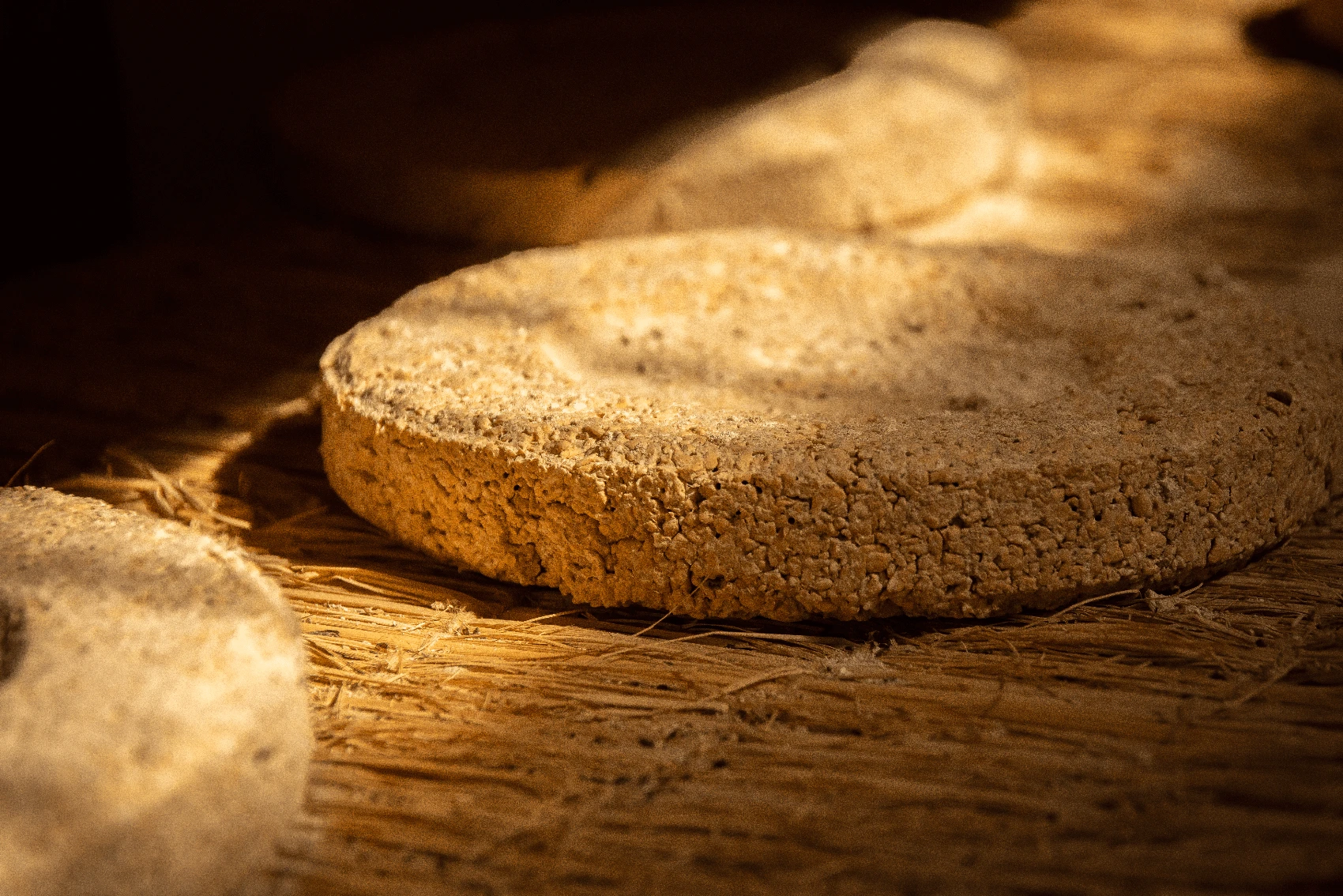
Nuruk is a cake of coarsely ground grain (usually wheat), moistened, pressed into a mold and left for weeks to grow its own microbes, traditionally bedded in straw or wrapped in leaves. Then a crowd moves in: molds, wild yeasts and lactic acid bacteria. The molds make enzymes that turn starch into sugar. The yeasts turn that sugar into alcohol. The bacteria keep the mash acidic, which protects it and adds tang.
All of this happens in the same pot at the same time. Sugar is released a little at a time as the yeast eats it, which is why a nuruk brew can reach the high teens in alcohol without adding any spirit.

What about natural sake?
If yakju has a cousin in natural wine circles, it isn't the sake on most restaurant lists. It's natural sake (自然酒, shizenshu), a small Japanese movement that has found its way into natural wine bars.
Brewers like Terada Honke and Akishika grow or source rice without chemicals, polish it less, skip added brewer's alcohol and charcoal filtration, and bottle much of it unpasteurized. They care about texture, acidity and age more than polish. A few use only wild yeast.

Tom Downey of PUNCH framed these sakes as sake's answer to natural wine, then added the caveat we'd repeat for yakju: "there is nothing natural about the complex steps required to turn rice into drinkable alcohol."
In other words, nobody's rice ferments itself.
Nobody's rice ferments itself.

All that being said, if you're already into natural wine, you're probably drawn to the same things that make nuruk-brewed yakju worth your time. (Or vice versa, as Kim Ha-jin (김하진) of Jubangjang Brewery in Daejeon observed.)
Here's why:
Mixed cultures. Nuruk isn't one yeast strain. One survey of 42 Korean nuruks found 64 bacterial, 39 fungal and 15 yeast species between them. (Song, et al. 2013)
Variation. Rice, water, nuruk, temperature, fermentation time and the brewer's hand all show up in the glass. Batches drift (that's a feature, not a fault).
Texture. Good yakju has weight: rice body, a little grip, a lactic softness.
Savory depth. Grain, bread dough, nuts, mushroom and soy, sitting alongside pear, melon and flowers.
Food pairing. Like natural wine, yakju has an acidity and savoriness that make it very food-friendly.
No fining. Yakju is rarely (if ever) fined with animal products, so most of it is vegan by default.


So what's “natural” about Korean rice wine?
The fermentation. That's where the real overlap is.
Japanese koji is made by inoculating steamed, sterile rice with one selected mold. It carries no wild yeast or bacteria, so sake brewers add those separately.
Nuruk, on the other hand, gets colonized by whatever lives on the grain and in the room. Researchers at the Korea Food Research Institute (KFRI) draw the line exactly there, writing that:
Nuruk and koji can be distinguished by the presence or absence of the wild-type yeast, lactic acid bacteria, and environmentally derived microorganisms.

A different kind of terroir
That's the closest thing rice brewing has to a wild ferment. It also makes nuruk surprisingly local. Old Korean recipe books, such as the Gyugonsiuibang (규곤시의방; 閨壼是議方) of 1670, describe dozens of styles: nuruk wrapped in wormwood, cured in pine needles, made with mung beans or lotus leaves. Mountain villages made theirs wide and thin, the plains thick and small, to suit the local humidity and sun.
When Korean food researchers looked at 58 different kinds of nuruk—including 46 reconstructed from historical recipes—variations in the starters clearly changed the drink. Mung-bean nuruk brewed something fruity enough to pass for fruit wine. Whole barley gave a grainy, almost beer-like body. Rice nuruk came out softer and smoother. (Lee, et al., 2017)
If all that sounds like terroir, it more or less is. Here, though, a lot of the place lives in the starter rather than the field.
If that sounds like terroir, it more or less is. Here, though, much of the place lives in the starter rather than the field.

Sejong City, South Korea; Farmers work in flooded rice paddies, manually planting seedlings.

Solsongju is a home-brewed liquor with a 530-year history, passed down through generations and now in the dedicated hands of Korean Food Master Park Hung-sun (식품명인 박흥선). Image: Chosun News
Is yakju pasteruized?
Traditionally, no.
But modern yakju comes in two forms. Saeng (생, “raw”) yakju is bottled with its yeast still alive, the way it was always drunk. Pasteurized (살균, salgyun) yakju is gently heated to stop fermentation.
The difference this makes is significant. Raw yakju keeps moving in the bottle: fresher, livelier and much more fragile. It needs constant refrigeration and can turn within a week at room temperature. Pasteurized yakju, on the other hand, will sit happily on a shelf for a year or more.
Pasteurization stops fermentation; it doesn't erase the evidence of it. The acids, aromas and texture built by weeks of mixed-culture brewing are still in the glass. What you lose is change over time and the bright edge of living cultures. What you gain is a drink that survives the 26,000 km journey from Busan to Gdansk.
Does pasteurizing with heat make a wine un-natural?
Natural wine’s core ethos is minimal intervention and even flash pasteurization/flash détente is explicitly excluded by Raw Wine’s exhibitor rules, the Raisin community, and the French Vin Méthode Nature charter (which lists flash pasteurization and thermovinification among banned "brutal and traumatic physical techniques").
The dominant position is that pasteurizing disqualifies a wine from the strictest definitions of “natural”. The more moderate position is that a minimal, transparent, well-executed flash treatment can be a rational tool for stability—especially for wines with no or very low sulfur, fragile microbial profiles, or difficult transport conditions, all of which is true of Korean yakju.
Nuruk doesn't rest
Nuruk is a hungrier beast than the yeasts that live on grapes.
Natural grape wine may be biologically active, but its fermentation is usually more yeast-centered and can often be stabilized through cold storage, low oxygen, or minimal sulfur—making pasteurization less necessary and more philosophically at odds with natural-wine practice.
Nuruk-based rice wine generally has a greater practical need for pasteurization because its mixed mold–yeast–bacterial fermentation and residual biological activity can keep changing the drink long after bottling. (Park, et al., 2013)
The yakju we sell at cult.

I'll be honest: it sucks that we don't carry saeng yakju. Raw Korean rice wine—both yakju and its unfiltered sibling takju—is what made me fall in love with sool in the first place.
But importing already raises hard questions about sustainability, and we don't take them lightly. That's why we ship by sea, the lower-carbon option, even though it means months in transit from Korea. Raw yakju would simply sour long before it reached our warehouse.
This restriction brings up a second problem. Namely that a lot of pasteurized sool is, frankly, underwhelming (especially if you're already familiar with a bottle's fresh version). During pasteurization, many brews lose the character that makes Korean brewing so rich and stimulating.
But as PUNCH writer Jenny Eagleton observed:
[Pasteurization] has become a bad word in wine, but it can actually make some beverages, even fermented ones, better.
That's why we spent so long traveling around Korea, visiting breweries, suljip (술집, drinking houses) and bottle shops, tasting everything we could in our search to find the pasteurized yakju that could do the category justice. What we were looking for: bottles that hold up after heat stabilizartion—yakju that retained the complexity of their nuruk , and sometimes come out deeper and mellower for it.
Trying hundreds of bottles of traditional Korean rice wine to find the rihgt ones was hard work. But, hey, someone had to do it.

Solsongju is a refined and delicate yakju, brewed with young pine shoots according to a 500-year-old family recipe.

With a familiar wine-like acidity, Sahwa Yakju is a perfect first yakju for natural wine drinkers.

Baekkyung 15 is a bold, expressive yakju brewed with handmade nuruk and rice from the brewery's own fields.
So, how do you drink it?
Nuruk-brewed yakju can be dry or off-dry, floral or savory, creamy or taut, quiet or downright complicated. Common notes include pear, apple, melon, white peach, banana, jasmine, chamomile, steamed rice, toasted grain, yogurt, fresh dough, mushroom and nuts. Pine, wormwood or citrus turn up when the brewer adds them, or when they went into the nuruk.
Treat it like a white wine or dessert with its own logic:
For raw yakju, serve it cool (around 8–12°C, not ice-cold). For pasterurized yakju, we suggest serving just below room temperature (around 18-22°C), to better appreciate the nuruk.
Use a white wine glass or small cup.
Give it a few minutes to open up.
Pair it with pickled and fermented things, seafood, tofu, mushrooms, grilled vegetables and gentle heat.

Remember—yakju isn't natural wine. But it belongs to the same conversation: wild cultures, texture, acidity, a little unpredictability, and a strong sense of local character. If that's what you look for in a glass, this is a good place to start.